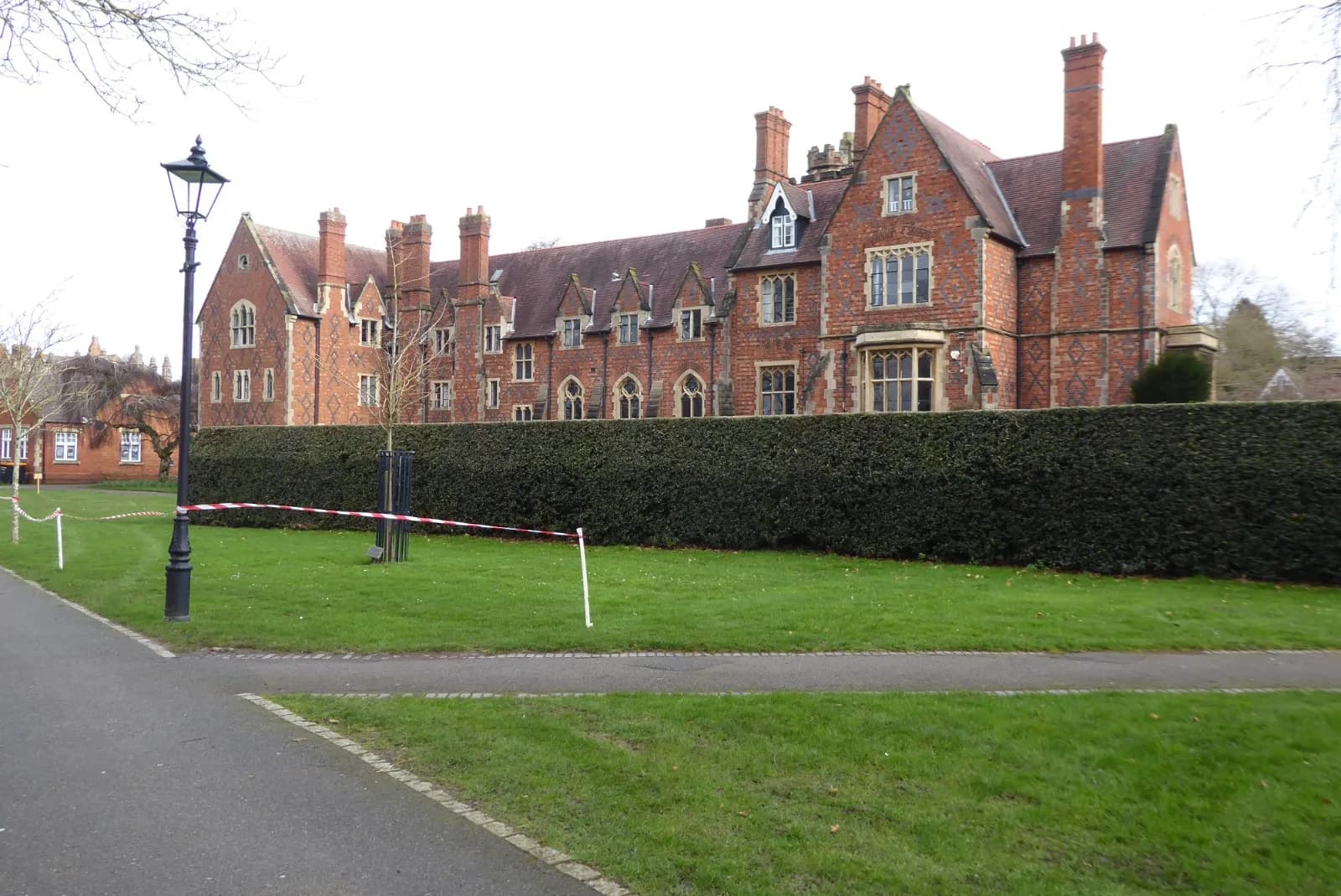
Rugby School has produced an extraordinary lineage of literary figures spanning nearly two centuries, from Victorian poets to Booker Prize winners. Its alumni include some of the most influential voices in English literature.
The Arnold Dynasty and the Birth of a Literary Reputation
The school's literary prominence began with Thomas Arnold, who served as headmaster from 1828 to 1842. His educational reforms, emphasising moral seriousness and muscular Christianity, transformed Rugby into one of England's most celebrated public schools. These reforms were immortalised in Tom Brown's School Days (1857), the semi-autobiographical novel by former pupil Thomas Hughes that created the archetype of the British public school story.
Arnold's own son, Matthew Arnold, attended Rugby from 1837 to 1841 and became one of the three great Victorian poets alongside Tennyson and Browning. His works, including "Dover Beach" (1867), "The Scholar-Gipsy" (1853), and the influential prose work Culture and Anarchy (1869), secured his place in the canon of English literature.
War Poets and the Spirit of Sacrifice
Perhaps Rugby's most famous literary son is Rupert Brooke, born in the town on 3 August 1887. His father, William Parker Brooke, served as Master of School Field House at Rugby School, and the young Rupert attended the school before proceeding to King's College, Cambridge. Brooke's war sonnets, particularly "The Soldier" (1914), captured the idealism of a generation heading to the trenches. He died of septicaemia on 23 April 1915 aboard a French hospital ship off Skyros, Greece. Today, his legacy is honoured in Rugby through a statue by Ivor Roberts-Jones, unveiled in 1988, and a girls' house named Rupert Brooke House.
The tradition continued with John Gillespie Magee Jr., who attended Rugby from 1935 to 1939 and won the school's Poetry Prize in 1938. Inspired by Brooke's example and Rugby's Roll of Honour, Magee wrote "High Flight" (1941), the sonnet that became the official poem of the RAF and is inscribed on the Space Shuttle Challenger Memorial. He died in a mid-air collision over Lincolnshire on 11 December 1941.
Revolutionary Voices in Children's Literature
Lewis Carroll, born Charles Lutwidge Dodgson in 1832, attended Rugby from 1846 to 1849. Though he reportedly found his time there unhappy, describing the hardships as something he would not willingly repeat, these years formed part of his education before he became a mathematician, photographer, and deacon at Christ Church, Oxford. His Alice's Adventures in Wonderland (1865) and Through the Looking-Glass (1871) revolutionised children's literature.
Salman Rushdie, who immigrated to England in 1961 and attended Rugby School before reading History at King's College, Cambridge, later remarked: "Almost the only thing I am proud of about going to Rugby school was that Lewis Carroll went there too." Rushdie won the Booker Prize for Midnight's Children (1981) and was knighted in 2007 for services to literature.
Continuing the Tradition
The literary tradition extends beyond these household names. Thomas Hughes, who attended Rugby from February 1834 under Thomas Arnold's headmastership, became a lawyer, judge, and Member of Parliament while producing the enduring Tom Brown's School Days. A statue of Hughes by Thomas Brock stands outside Rugby School Library, unveiled in 1899.
Other notable literary alumni include F. L. Lucas, who became Reader in English Literature at Cambridge; Jon Stallworthy, Professor of English at Oxford and biographer; and Francis Stuart, the Irish writer and Republican. Together, these voices represent nearly two centuries of literary achievement emanating from one Warwickshire town.